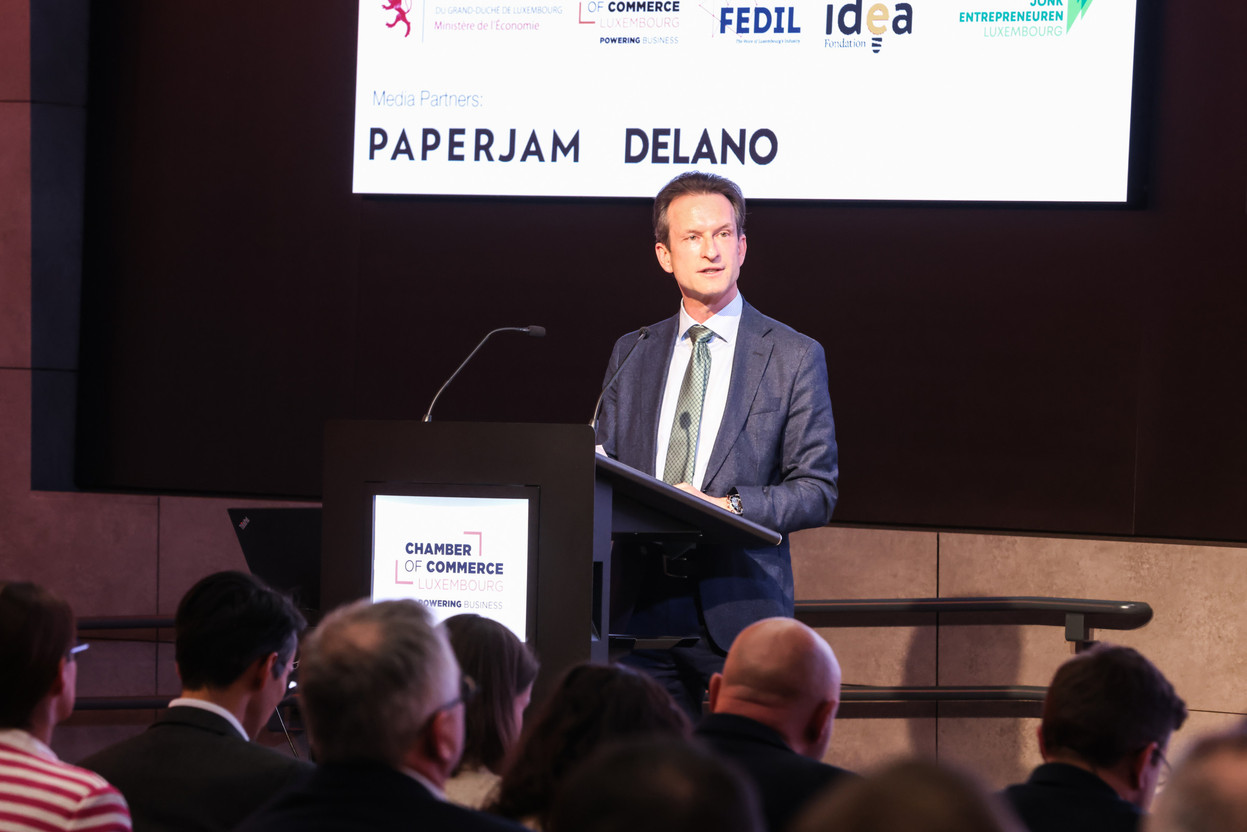
The defence sector is so "fashionable" that Economy Minister Lex Delles, has a machine-gun pace so that the 200 guests at the Chamber of Commerce understand that the government has been widely criticised in 2025 despite dozens of plans, strategies, laws, aid, mechanisms or the arrival of top players.
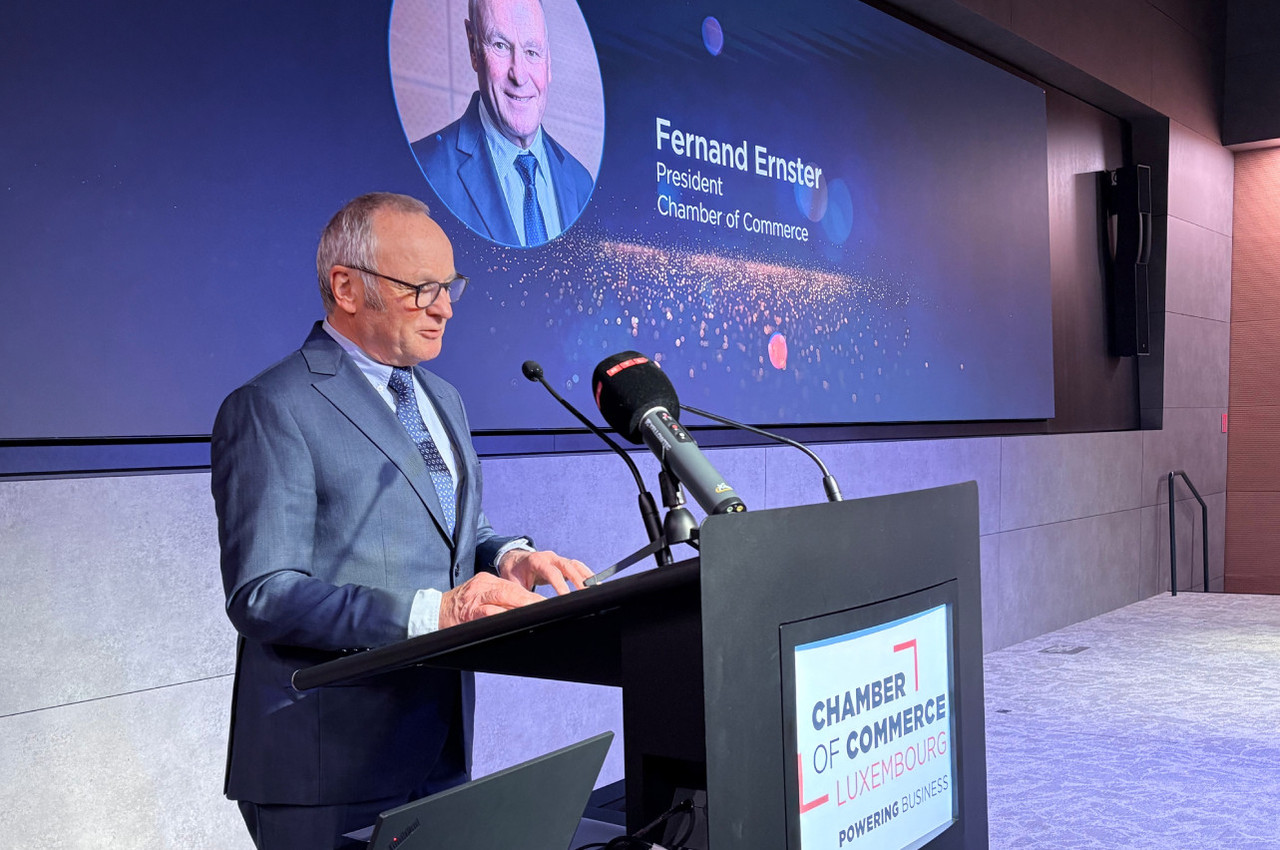
If these "bullets" are struggling to touch the hearts of the entrepreneurs in the room, it is because they are facing a much more complicated reality, between small-time geopolitics, the energy crisis, a hodgepodge of European regulations, and even "gold plating", said Chamber of Commerce president Fernand Ernster. "This represents a real burden. Additional standards and obligations are becoming a considerable drag on the ground. It often happens that, faced with these administrative obstacles, opportunities are simply abandoned. For many small and medium-sized businesses, the situation is as follows: no matter how hard they try to comply with the authorities' requirements, there is always a point left, because the procedures are so complex and often ill-adapted to internal realities. And that's before you have a chance to seize an economic opportunity. With these complex regulatory frameworks, a business opportunity is lost."
As a result, productivity has fallen by an unprecedented 2.9% in 20 years, while it has risen by 22% in the rest of the world, a lack of housing like chewing gum stuck under the sole of attractiveness, absenteeism that weighs heavily, increasingly complicated access to finance and prospects that are difficult to clarify at a time when everyone is calling for predictability.
"Everyone talks about simplification, but you can't wave a magic wand and make it happen," asserts Lex Delles. His hosts remind him of two things. "Don't paint the sky blacker than it really is", says Mr Ernster. "We need to return to pragmatism", he said in unison with Carlo Thelen.
The President of the Chamber of Commerce had insisted on the need to restore profitability to companies, an essential condition for investment and the transformation of the economy. According to him, "businesses need to become more profitable overall, because that's precisely where the difficulties currently lie in terms of investment, digitalisation and modernisation of production tools". He reiterated that the issue goes beyond economic growth: "It's not just about growth, it's also about competitiveness", pointing out in passing and explicitly that the message from the Prime Minister, Luc Frieden, at the Fedil's New Year's greetings - where he called for 2026 to be the year of competitiveness - had been both well heard and well received.
This competitiveness is at the heart of the balance of the Luxembourg model. The President emphasised that "growth is decisive for our social model" and warned that the coming year must mark a turning point: "2026 will be the time to make our economy more competitive so that our generous social model can once again be financed." He also called for a change of pace in public action, regretting that "the capacity for reform, even this boldness to reform", had been "observed too little in 2025 on various issues".
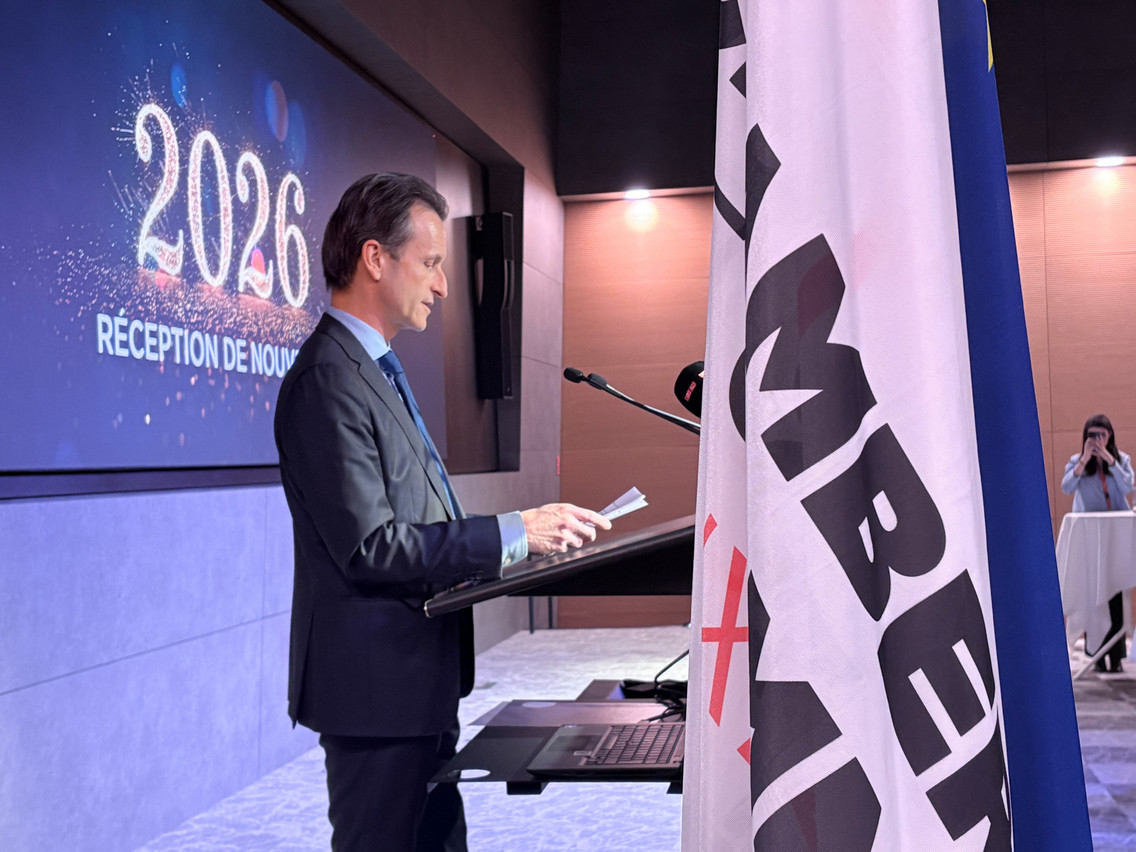
For Carlo Thelen, "anything that is not put on the rails in the form of bills in 2026 will have little chance of being adopted before the next elections." (Photo: Paperjam)
Along the same lines, Carlo Thelen, Director General of the Chamber of Commerce, insisted on the decisive nature of the year 2026. "In this sense, 2026 is decisive. We need to act this year," he said, stressing the constraint of the political timetable: "Anything that is not put on the rails in the form of bills in 2026 will have little chance of being adopted before the next elections."
The CEO gave an uncompromising assessment of the economic environment, marked by an international context that he deems "difficult, even worrying". In his view, the combination of more unstable international demand, high energy prices and regulatory changes "makes the task of companies more complex and more costly". But he focused above all on internal weaknesses, referring to "structural problems that we, as a Chamber of Commerce, have been pointing out for years".
Among these obstacles, Carlo Thelen cited "high production costs", productivity that "has made little progress", and "difficult access to finance, which is a real 'headache' for many companies". Added to this are the challenges posed by housing, absenteeism and an ageing population, all of which weigh on the ability to create value.
Faced with these challenges, the Chamber of Commerce intends to play its part to the full. Carlo Thelen pointed out that "our social model must remain financeable and be adapted to a new economic and growth model", while emphasising that Luxembourg still has assets: "Luxembourg still has a relatively favourable starting position compared to other countries" and "many levers to react pragmatically to challenges and problems".
The two leaders finally agreed on the importance of openness and talent. According to the President, internationalisation remains "an essential lever", with Europe remaining "the preferred area of development for Luxembourg companies". For his part, Carlo Thelen highlighted concrete tools, believing that "the new Talent Desk is a concrete response to the challenges of recruiting and integrating international talent".
Overlapping the speeches, the same message emerged: 2026 should be the year of economic renewal, based on competitiveness, the capacity for reform and a more business-friendly framework. As the President of the Chamber of Commerce summed up, "we now expect 2026 to become effectively the year of economic renewal, based on competitiveness and a business-friendly framework, stimulating growth".
The government has done a lot in 2025, it's true. But these measures must produce positive effects. That's the only thing that will silence the critics. At least temporarily.