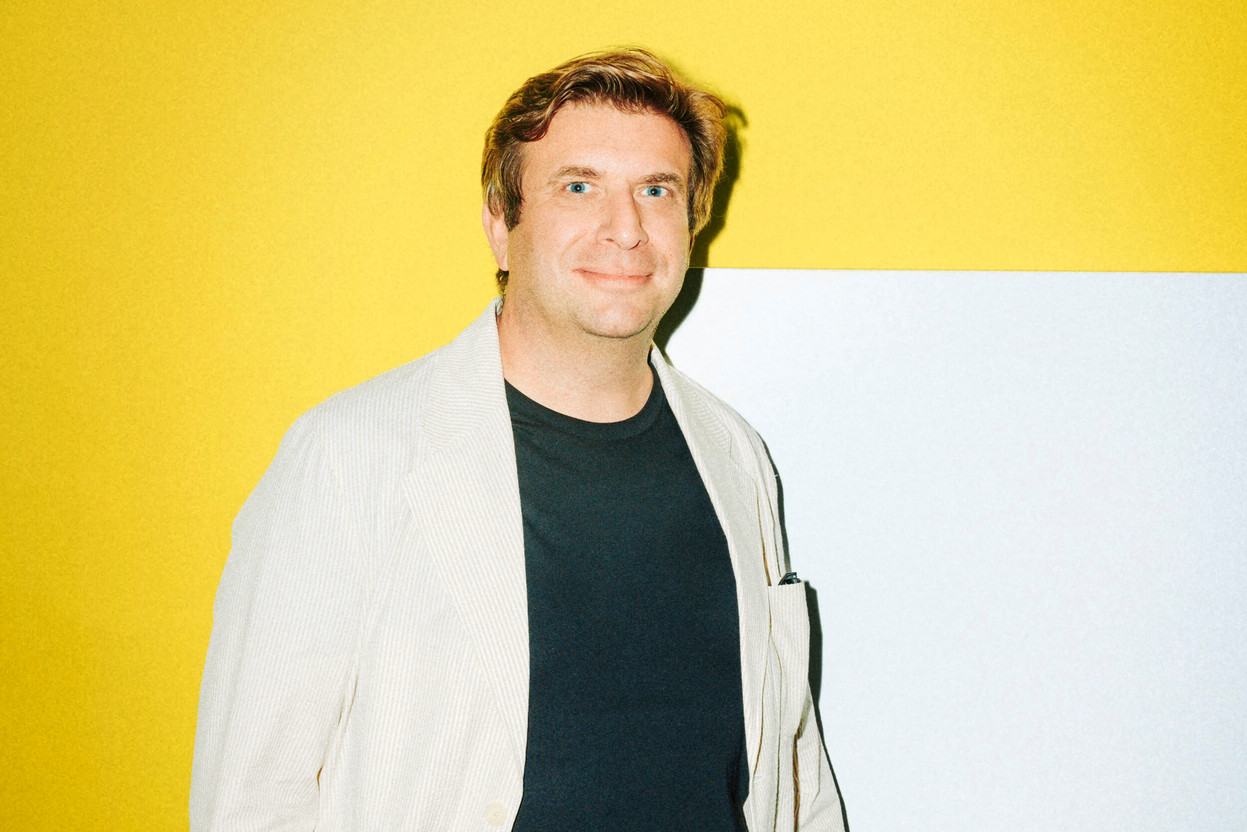
You’ve spent more than 30 years in private banking. Why did you decide to become an entrepreneur after such a long career?
Bernard Lurquin. – “After so many years in private banking, I had gained significant experience in wealth management and, above all, in building relationships with families. But I wanted to take that relationship a step further. In a large institution, you inevitably operate within a defined framework. By setting up my own firm, I was able to choose how I wanted to support my clients and, above all, devote more time to each of them.
That is what led me to set up my family office in 2013.
What did you want to do differently?
“I wanted to put the family back at the heart of our advisory service. When we talk about wealth, we immediately think of investments, performance or structuring. These are obviously important issues, but they represent only part of the picture.
Behind every family fortune lies a family history, entrepreneurs, children – sometimes spanning several generations – and differing visions of what to do with that wealth. It is this broader perspective that interests me.
Your organisation deliberately supports very few families. Why have you made this choice?
“We work with around four families, and this is by choice. A family office like ours is built on an extremely close relationship with the people we advise. To support them effectively, we need to understand not only their financial situation, of course, but also their background, their plans and their concerns.
It takes time. If we were to take on more clients, we would inevitably lose some of that personal touch.
Does that mean you’re not seeking growth at any cost?
“No. My aim has never been to build a large organisation. There are three of us now, and this model suits us. Success isn’t necessarily measured by the number of staff or clients. I prefer to support a limited number of families and be able to be there for them when they need us.
How does your role differ from that of a private banker?
“We are not here simply to select investments or manage a portfolio. Our role is more about coordinating all aspects of a family’s wealth management. This may, of course, involve investments, but also wealth structuring, succession planning, intergenerational relationships and the various specialists who work with the family. We need to have a holistic view.
Why does knowledge transfer play such an important role in your approach?
“Because passing on a legacy is not simply a matter of transferring assets from one generation to the next. We must ask ourselves what we really wish to pass on. Is it just money? A business? Values? A way of looking at the world? A sense of responsibility? Families who have built up a substantial estate will, sooner or later, find themselves faced with these questions.
Could money become a problem when it comes to this transfer?
“Yes, because inheriting a substantial estate also entails a responsibility. If the next generation has never been involved in the decision-making process or has not been prepared to manage this wealth, the transfer can become complicated.
We must therefore gradually foster a dialogue between the generations. The aim is not to impose their parents’ views on children, but to enable them to understand the history of their heritage and to reflect on what they themselves wish to do with it.
So the support you provide goes far beyond financial matters?
“Absolutely. Finance is a tool, not an end in itself. What interests me is understanding what a family hopes to achieve with its wealth. Some want to preserve a family business, others to support philanthropic projects, invest in the economy or simply ensure a smooth handover to their children. The key question then becomes: what should this wealth be used for?
Does this discussion on succession also apply to entrepreneurs?
“Of course. For an entrepreneur, a large part of their wealth may be tied up in the business they have built. When the time comes to hand over the business, there are many questions to consider. Do the children want to take over the business? Do they have the skills or the desire to do so? Should the business remain in the family, or should another solution be considered? These are decisions that involve both personal and financial considerations.
You also talk a great deal about the economic and social value that heritage can have.
“Because an inheritance can continue to yield something. Capital can be invested in businesses, used to fund projects or help generate economic activity. It can also be used to support causes close to a family’s heart. The challenge, therefore, is to consider how this wealth can retain its meaning across generations.
After more than ten years as an entrepreneur, is the question of passing on your business also on your mind?
“Yes, of course. I’m 62 years old and I need to apply to my own business some of the ideas I’ve been discussing for years with the families we support.
I work mainly with my business partner, and we are gradually preparing for this handover.
I actually find it interesting to go through this process myself. When you advise entrepreneurs on handing over their business, you understand their concerns even better once you start asking yourself the same questions.
Is it difficult for a founder to imagine their business without them?
“A business you have founded inevitably reflects a part of yourself. You therefore need to learn to adapt your role. But handing over the reins doesn’t mean disappearing overnight. It can be a gradual process. You need to make room for others, pass on your experience and allow the next generation to develop their own way of doing things. Ultimately, that is exactly what we explain to families.
What role would you like to continue in during this new phase?
“I want to continue sharing my experience and offering guidance. After more than 30 years in private banking and over ten years as an entrepreneur, I have gained a wealth of experience, enjoyed successes, but have inevitably made mistakes too. All of this can be useful to those who are gradually taking on more responsibility.
The handover of a business is not just about customers or files. It is also about a culture and a way of working.
Looking back, what has entrepreneurship given you that you wouldn’t have found in private banking?
“The freedom to build a model that reflects my vision of the business. We’ve chosen to remain small, to work with very few families and to prioritise the depth of our relationships over volume. It’s probably not a model that would suit everyone. But it’s exactly what I wanted to build.
After all these years spent advising wealthy families, how would you ultimately define wealth?
“Wealth is not merely about financial assets. It also lies in what one manages to build with those assets, in what one passes on to one’s children, and in the way in which that wealth can continue to create value around one. Ultimately, the real challenge is perhaps not simply to preserve capital from one generation to the next. It is to pass on something that retains its meaning.”
This article was written for the October 2026 issue of Paperjam magazine, published on 16 September. The content is produced exclusively for the magazine. It is published on the site to contribute to Paperjam’s comprehensive archive. Click on this link to subscribe to the magazine.
Is your company a member of the Paperjam Club? You can request a subscription in your name. Please let us know via [email protected].