The conference held in Luxembourg had the feel of a sales presentation. Cecabank now has the regulatory and technical foundations in place to offer services relating to digital assets. It now needs to make these services available through its branch in Luxembourg.
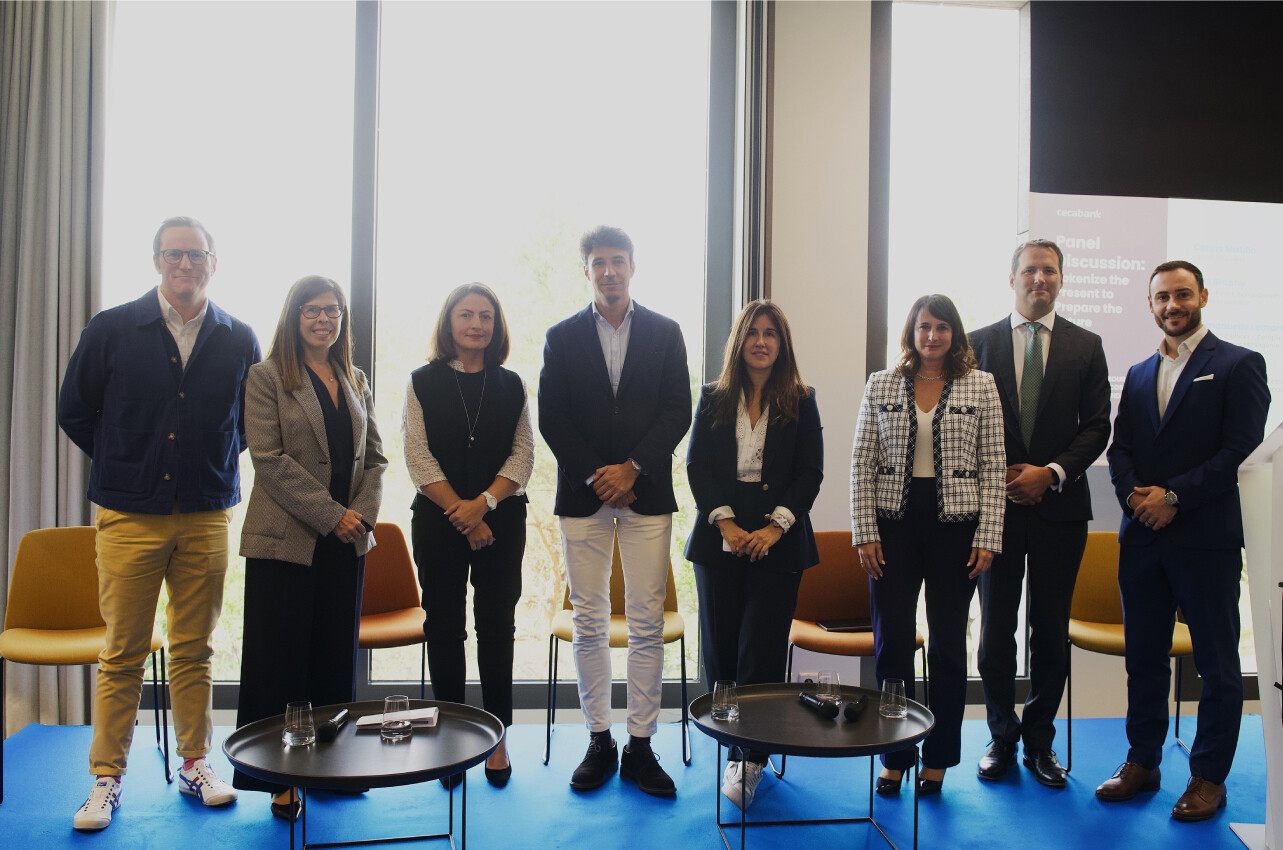
On Thursday 24 September, the Spanish bank brought together Caixabank Asset Management Luxembourg, ioBuilders, Luxembourg for Finance, Qivalis and the Solana Foundation. The stated aim was to demonstrate how it intends to link its long-standing securities custody activities with finance based on distributed ledgers.
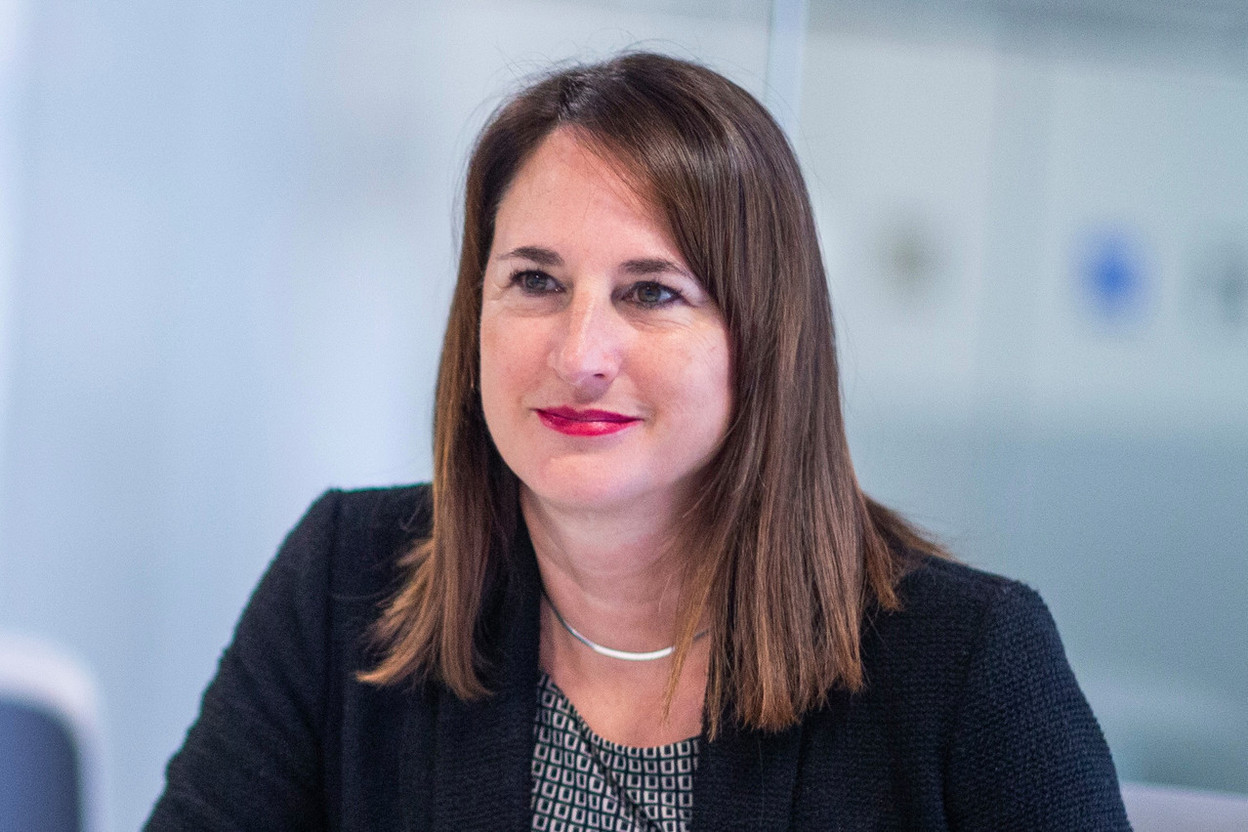
“At Cecabank, we are building a bridge between traditional financial infrastructure and the emerging tokenised economy,” said its CEO, Ainhoa Jáuregui. The bank aims to give its customers access to “new forms of digital currency, stablecoins and tokenised assets”, with the same standards of security, oversight and compliance as for traditional instruments.
A service for financial institutions
The service is aimed at financial institutions, rather than private individuals directly. Cecabank provides them with the infrastructure enabling them to hold crypto-assets, submit orders and carry out transfers. Client banks can thus offer these services to their own users without having to build the entire technology stack themselves.
In 2025, Cecabank was granted a MiCA authorisation by the Spanish National Securities Market Commission (CNMV). It describes itself as the first Spanish B2B custodian to be authorised under this framework and registered with the European Securities and Markets Authority. The group launched its crypto-asset custody service for financial institutions in May 2026.
However, the service is not yet automatically available in Luxembourg. Cecabank states that it has initiated the process of extending its authorisation under the European passporting scheme to the Grand Duchy, Ireland and Portugal. This procedure should enable it to provide in those countries the services for which it is already authorised in Spain.
Luxembourg’s appeal goes beyond mere commercialisation. Cecabank has become a founding member of Regulated Layer One, or RL1, a pan-European blockchain infrastructure based in Luxembourg and designed for financial sector operations. The bank claims to be the first Spanish institution to have joined this project.
Two appointments, different roles
At the same time, she is involved with Qivalis, the banking consortium that is developing a euro-denominated stablecoin and backed on a one-to-one basis against traditional currencies. The latter comprised 37 financial institutions from 15 countries following the arrival of 25 new members in May, including Cecabank and Spuerkeess. The project is still seeking authorisation as an electronic money institution from the Dutch Central Bank and is therefore not yet issuing electronic money. Its commercial launch was announced for the second half of 2026.
These two initiatives cover different functions. Qivalis is working on the currency that could be used to pay for or settle a transaction on the blockchain. RL1 is developing the infrastructure on which regulated institutions will be able to register and trade assets. Cecabank, for its part, aims to provide custody services and facilitate operations between these new networks and existing financial systems.
The bank says it has tested this mechanism by taking part, in July, in Spain’s first interbank trial of tokenised deposits. Unlike a stablecoin issued by a specialised entity, a tokenised deposit represents a claim on the bank where the funds are held. Its use could automate the payment and settlement of financial assets, without removing the money from the bank’s balance sheet.
This digital strategy builds on an already substantial custody business. At the start of 2026, Cecabank reported more than €400bn in assets under custody, including more than €285bn in deposited assets, for over 100 financial institutions. Since 2025, its Luxembourg branch has been supporting asset managers with vehicles falling within the Ucits and AIFMD frameworks.
“Eighteen months after our branch opened, we can say with confidence that it was the right decision,” says 
The next step will be more practical than the round-table discussion: finalising the MiCA authorisation process and converting these infrastructures – which are still under construction – into services that can actually be used by Luxembourg-based institutions. Cecabank no longer comes to the Grand Duchy simply to hold traditional funds there. It is seeking to establish a foothold there before their currency and assets begin to circulate on the blockchain.