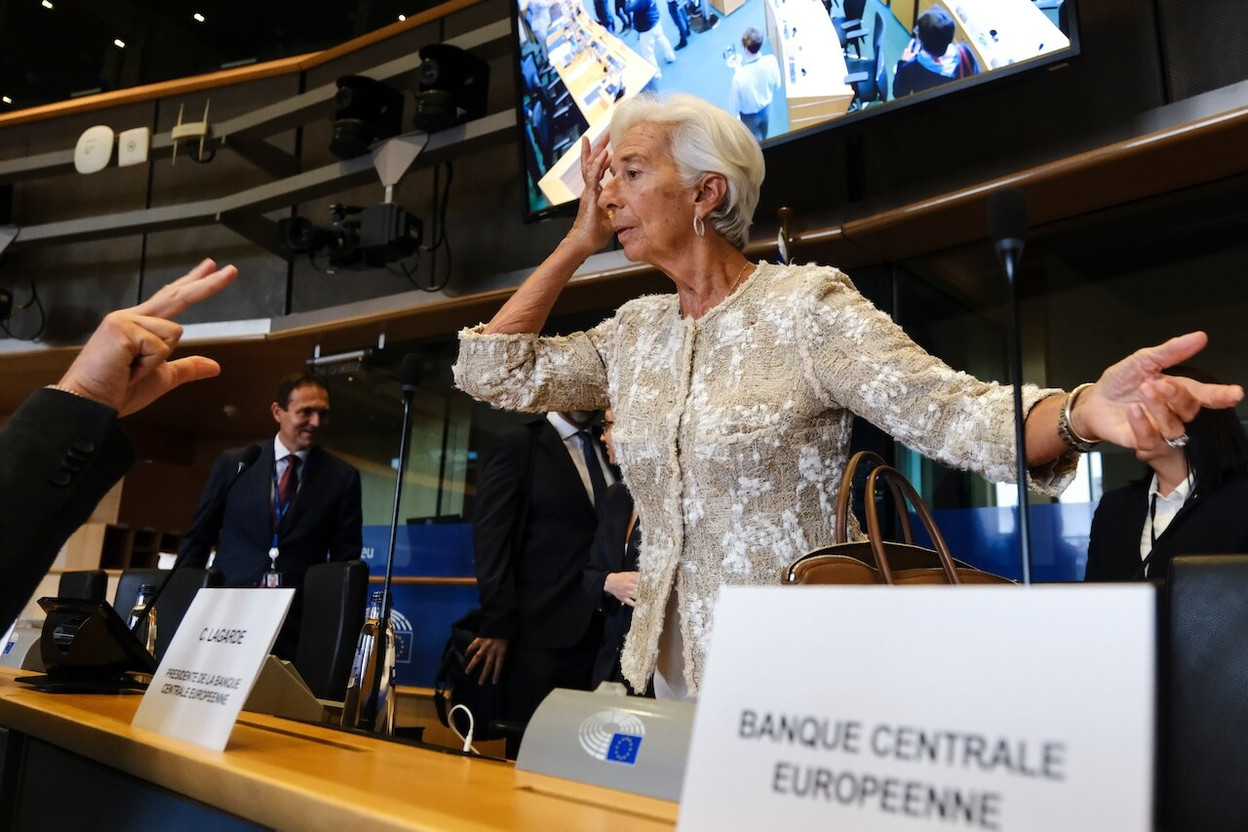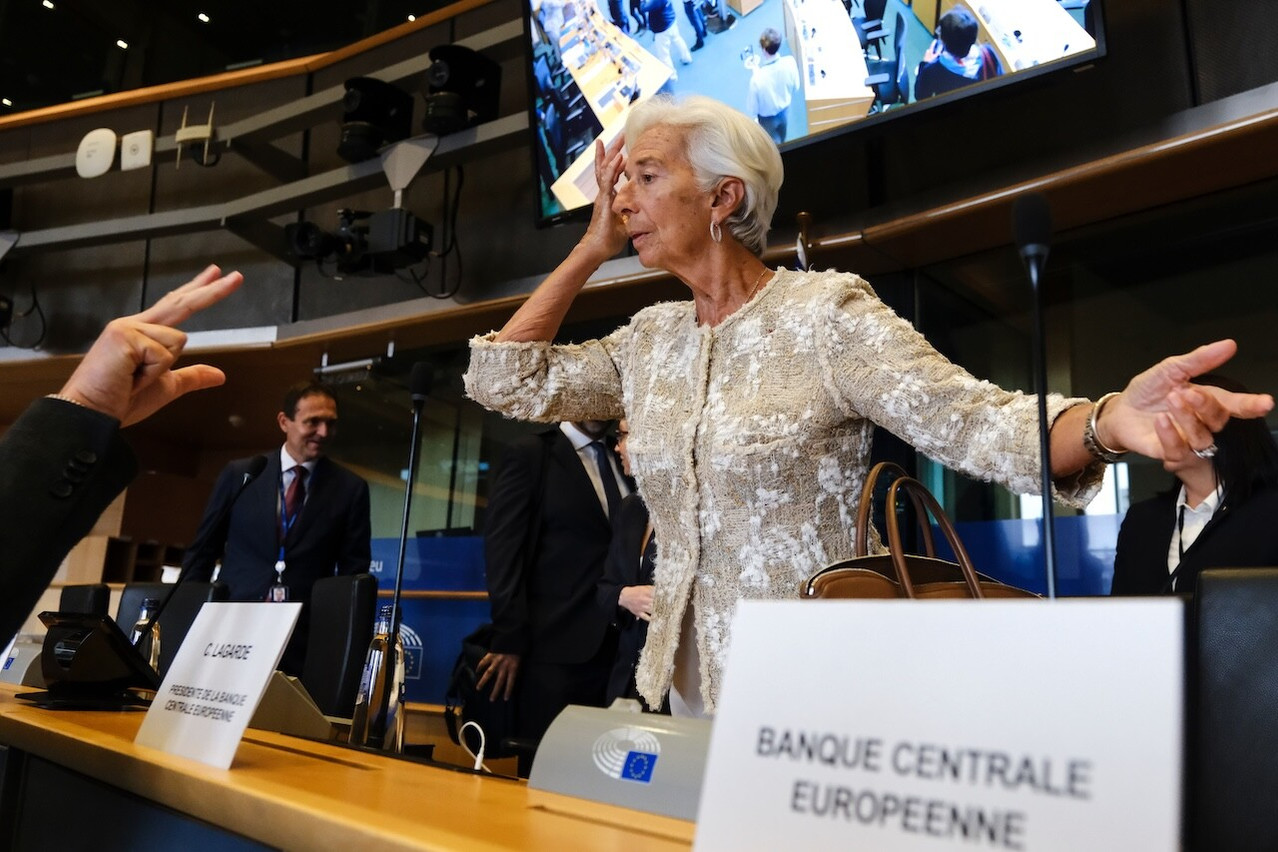
Christine Lagarde has shortened the time taken to carry out the calculations. By announcing, on 29 October, that she would step down as president of the European Central Bank (ECB). On 7 February 2027, nearly nine months before the scheduled end of her term of office, she accelerated the process of a succession that was already shaping up to be contested. Rumours of the president’s departure had been circulating for several months already, but the announcement turned speculation into immediate decisions.
Trade-offs, as the presidency of the Frankfurt-based institution is only one part of the negotiations. Indeed, Isabel Schnabel of Germany will leave the executive board on 3 January to join the International Monetary Fund (IMF). As for the term of office of the Irish chief economist, Philip Lane, it will end at the end of May. In five months’ time, half of the six members of the executive board will have been replaced.
This concentration of departures facilitates a broad agreement. Support for a presidential candidate can be combined with a bid for another seat. In addition to the candidates’ individual skills, there are also considerations regarding the balance of power between countries and monetary sensitivities.
One seat for three
Two frontrunners stand out: Pablo Hernández de Cos, former governor of the Bank of Spain and managing director of the Bank for International Settlements (BIS), and Klaas Knot, former head of the Dutch Central Bank. The president of the Bundesbank, Joachim Nagel, is also among the names being mentioned. According to Reuters, Paris would support Klaas Knot on condition that a French national is appointed chief economist. An “informal proposal”, as it is known in diplomatic jargon, which illustrates the logic behind the discussions: a capital city may back a foreign candidate to boost its chances of securing another post. It is understood, however, that the allocation of responsibilities within the Executive Board is ultimately a matter for the ECB’s internal organisation.
Luxembourg will not put forward any candidates. That much is certain. Is it because Christine Lagarde’s resignation came as a surprise? That is the theory being put forward.
The timetable is tight. Eurozone governments have until Friday 6 November to put forward candidates. Finance ministers will examine the nominations on 9 November at an Ecofin Council meeting, the majority of whose agenda was devoted to the European budget. A meeting of the eurozone (Eurogroup) is also scheduled for the same date. This first deadline concerns the submission of nominations, without requiring each capital city to reveal its support.
The little game of alliances
In Luxembourg, no preference has been publicly stated. “At this stage, it is still too early to comment on the succession to the ECB presidency. We therefore have no specific position to announce at present,” the ministry of Finance tells us.
For the Grand Duchy, the precedent set in 2019 illustrates how to exert influence in such decisions. When Christine Lagarde was first appointed, the prime minister at the time, 
After three days of discussions, the compromise had assigned the Commission to Germany’s Ursula von der Leyen, the ECB to Christine Lagarde, the European Council to the Belgian liberal Charles Michel and foreign affairs to the Spanish socialist Josep Borrell. Luxembourg had backed this package, which notably secured a place for the liberal family and a Benelux partner. Xavier Bettel had even been the first leader to publicly announce the agreement, with a “Done!” on Twitter.
Partnership with Paris in 2019 and Berlin in 2022
This precedent sheds light on Luxembourg’s options regarding the upcoming succession, without prejudging the Frieden government’s current strategy. The Grand Duchy may seek to exert influence through its support for a candidate and through coordination with its partners. For, beyond the ECB, other posts will need to be filled in 2027. One naturally thinks of the presidency of the European Stability Mechanism (ESM), which has been held since December 2022 by 
The appointment of Pierre Gramegna as head of the ESM in 2022 illustrates these political alliances. Backed by Berlin, the former Luxembourg Minister for Finance had faced resistance from France and Italy, whilst Paris was backing his Portuguese rival, João Leão. As neither candidate secured the necessary 80% of weighted votes, both withdrew in September, leaving the institution to appoint an interim head. Two months later, Pierre Gramegna returned as the sole candidate, following a change of stance by Paris and Rome. He was appointed on 25 November, with Portugal abstaining.
For Luxembourg, this success serves as a reminder that a bid depends as much on securing support as on overcoming opposition. Alliances also vary depending on the issue at hand: whilst the Grand Duchy had been close to Paris during the 2019 European negotiations, this time it found its main support in Berlin.
Further compromises to be worked out
In an institutional setting where compromises are essential in the political manoeuvring surrounding the appointment of European officials, sitting this one out and supporting one’s partners can be a winning strategy.
We will see another example of this with the renewal of the presidency and the Bureau of the European Parliament. This is a separate matter on which negotiations are well under way between the member states and the political groups represented in the Chamber. The succession of the current president, Roberta Metsola (PPE), is due to be settled in January amongst the political parties forming the parliamentary majority – a rather loose coalition – namely the PPE, S&D and Renew.
The posts of vice-presidents and questors of Parliament are also filled anew during this mid-term reshuffle. The member of parliament for Luxembourg