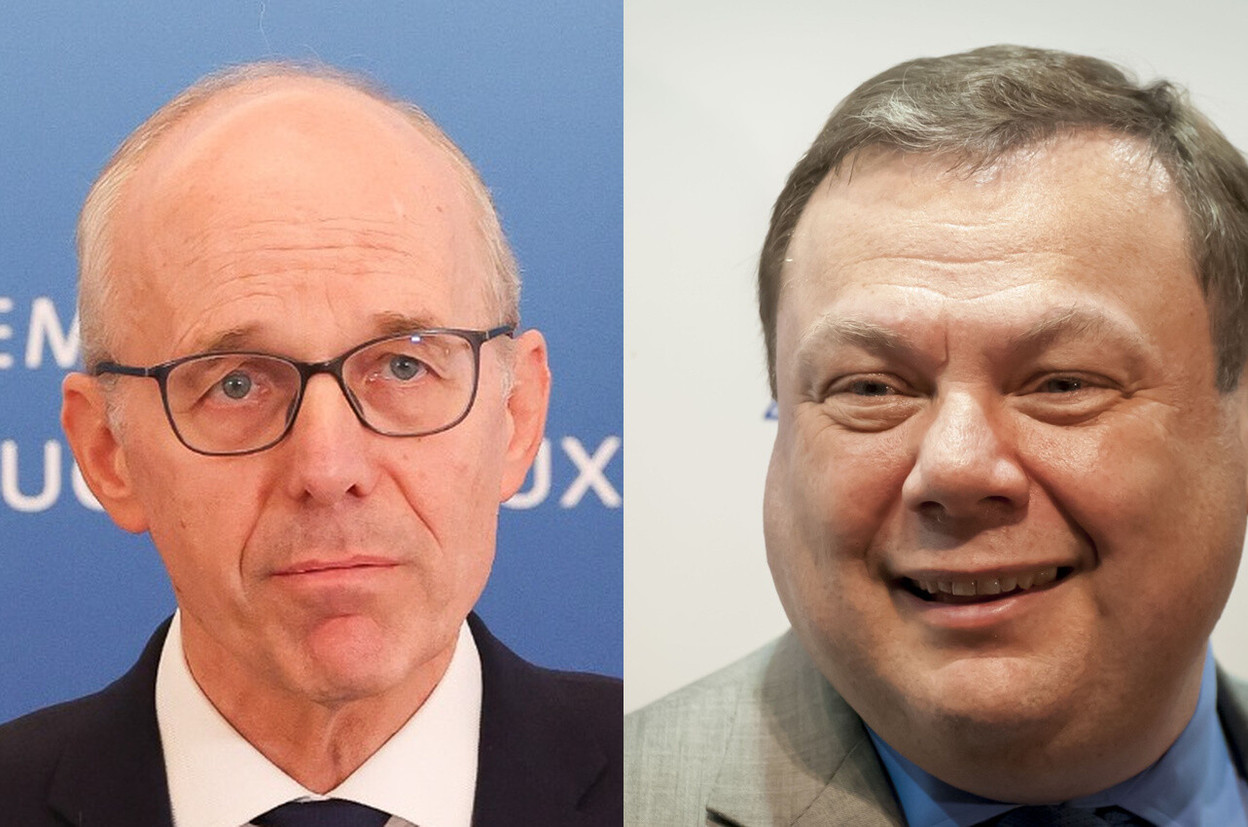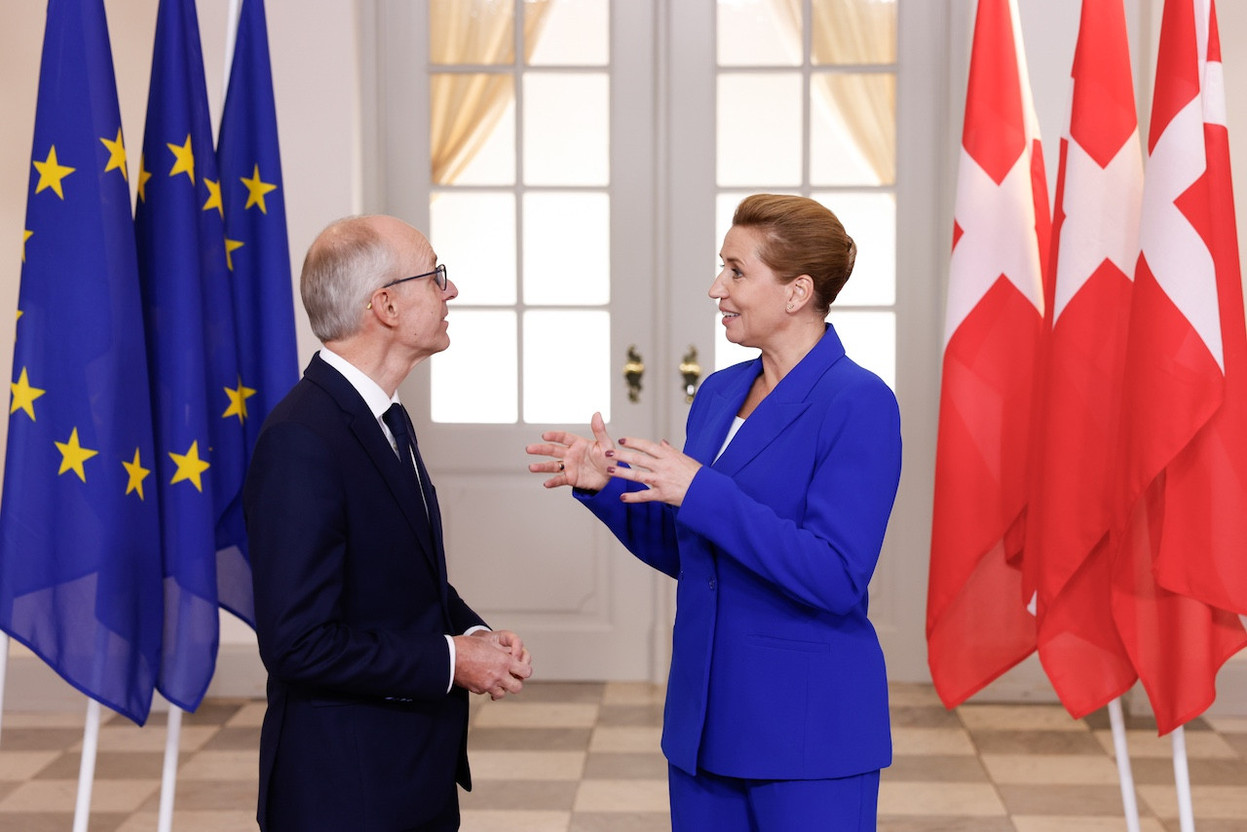
Whilst Luxembourg’s position on the removal of Mikhail Fridman from the European Union’s sanctions list is due to be debated before the Committee on Foreign and European Affairs, Cooperation, Foreign Trade and the Greater Region on Monday 12 October, Javier Garcia Olmedo, a specialist in arbitration at the University of Luxembourg, discusses the implications of this removal for Luxembourg.
In his view, to reduce the controversial removal of Mikhail Fridman from the EU sanctions list – which targets individuals and institutions deemed to be close to the Russian government – to the question of whether or not Luxembourg exerted direct pressure to have an oligarch who posed a threat to the country’s finances removed from that list would be to lose sight of the bigger picture.
It is worth noting that the European Union’s sanctions policies have a major weakness: joint sanctions can expose a state to substantial claims. These substantial claims may leave them feeling isolated due to a major shortcoming in the sanctions framework: a mechanism for sharing the financial risk in the event of potential claims.
A regrettable gap in the EU sanctions framework, according to Javier Garcia Olmedo. A gap that raises the question of how to preserve European cohesion when the potential financial consequences of sanctions are concentrated on certain Member States. And whilst there is a long way between the start of arbitration proceedings and a ruling, a government may seek to influence the contested measure. To suggest that Luxembourg manoeuvred in this case to safeguard its interests is a theoretical hypothesis, not proof of any collusion.
The Prime Minister, 
Appeals on all fronts
It should be borne in mind that Luxembourg was not the only country targeted by Mikhail Fridman. The Russian national has brought six legal challenges – either directly or through his companies – against the sanctions imposed on him following the sanctions targeting Russian interests and individuals deemed to be close to the Kremlin. In his personal capacity, he has taken legal action against Luxembourg, the United Kingdom and the Netherlands, whilst, through his companies, three legal challenges have been brought against Ukraine.
By the end of 2025, 24 challenges to sanctions or security measures relating to Russia had been lodged by individuals subject to sanctions. Of these, eight concerned EU Member States; three concerned the United Kingdom and Canada; and 13 cases targeted Ukrainian sanctions and security measures. Belgium is also at the forefront of this issue: by the end of 2025, the country had been the subject of four notices of dispute. In May 2026, the Belgian press reported nine notifications. It is understood that a notification constitutes a prelude to a request for arbitration. These notifications were made on the same legal basis as that used by Mikhail Fridman: the bilateral investment treaty signed in 1989 between the Soviet Union and the Belgian-Luxembourg Economic Union (UEBL) on the reciprocal promotion and protection of investments.
A complaint does not amount to a conviction
A second point to bear in mind is that “the removal of Mikhail Fridman from the EU’s sanctions list in no way implies that the arbitration proceedings between him and Luxembourg have been halted”, explains Javier Garcia Olmedo. “Legally speaking, however, it may complicate certain aspects of the claim, particularly the assessment of damages. In determining whether expropriation has taken place, the extent and duration of the deprivation are important factors; yet the assets are no longer frozen. The issue of any losses incurred during the period of the freeze is therefore distinct from that of the total value of the investments.”
But this withdrawal weakens its position. “A position that faces several serious legal obstacles. The 1989 treaty contains a narrow arbitration clause, limited to the amount or payment of compensation in the event of expropriation. In the case of Berschader v. Russia, based on this same treaty, the tribunal interpreted this clause restrictively and refused to extend its jurisdiction via the most-favoured-nation clause. Other tribunals dealing with comparable clauses have adopted a broader approach. The question therefore remains open.”
The €14.5 billion claimed by Mikhail Fridman does not prejudge the outcome of the arbitration or the amount of compensation, if any, that might ultimately be awarded, explains Javier Garcia Olmedo. “Furthermore, arbitration proceedings never preclude negotiation or an amicable settlement between the parties prior to the award. At this stage, nothing has been announced.” He went on to say, “the figure claimed may have a political impact far greater than what it would legally entail.”
Protection under the 18th package
Furthermore, there is a long way to go from a potential award to the payment of compensation. An arbitral award is never enforced automatically. The parties may apply to the courts of the country where the arbitration is seated to set aside the award on limited grounds. In this case, that country is Hong Kong. Then there is the matter of enforcing the decision – in other words, getting paid. This is by no means a foregone conclusion. Even without considering the possibility of bad faith on the part of the Luxembourg-based debtor, ‘Mikhail Fridman should not be able to enforce a judgement in Europe’.
“Since the 18th package of sanctions adopted in July 2025, a judgement handed down in this type of proceedings outside the Union and relied upon by Russian nationals subject to the Regulation may not, in principle, be recognised or enforced in a Member State. The Regulation also allows Member States, under certain conditions, to recover damages and legal costs arising from such proceedings. As the Fridman arbitration is seated outside the EU, any award would therefore face particularly significant obstacles within the EU. This does not, however, preclude attempts at enforcement in third countries.’
Common sanctions, unequal exposure
“This mechanism does not, in itself, constitute a pooling of budgetary risks amongst the Twenty-Seven,” observes Javier Garcia Olmedo. And on this crucial point, the EU remains silent.
Faced with this institutional silence, “arbitration can become a means of securing a review of sanctions, regardless of the prospects of obtaining compensation”, the researcher explains. He refers to the concept of ‘regulatory chill’: the threat of litigation influences public decision-making even before any judgement is handed down. Will the Fridman case inspire others to pursue similar courses of action, leading to new requests for arbitration? “According to Bloomberg, other individuals subject to sanctions are already studying the Fridman and Ousmanov cases as precedents. It is too early to say whether this will result in new requests.”
To reduce this kind of tension between national responsibility and common European policy, Javier Garcia Olmedo calls for greater European solidarity based on three pillars: better pooling of expertise and certain defence costs in litigation relating to sanctions; consideration of a European mechanism for sharing the exceptional financial risks arising from such proceedings; and, in the longer term, a coordinated review at European level of the exposure created by past investment treaties concluded by Member States. He adds that ‘it must always be possible to challenge sanctions in court’. “The challenge is to organise this liability without allowing the amount of a claim to exert disproportionate influence over political decisions.”
To uphold its sanctions policy, the EU will also need to clarify who bears the risks. As long as this remains unclear, each government will be tempted to work out the cost of solidarity on its own.