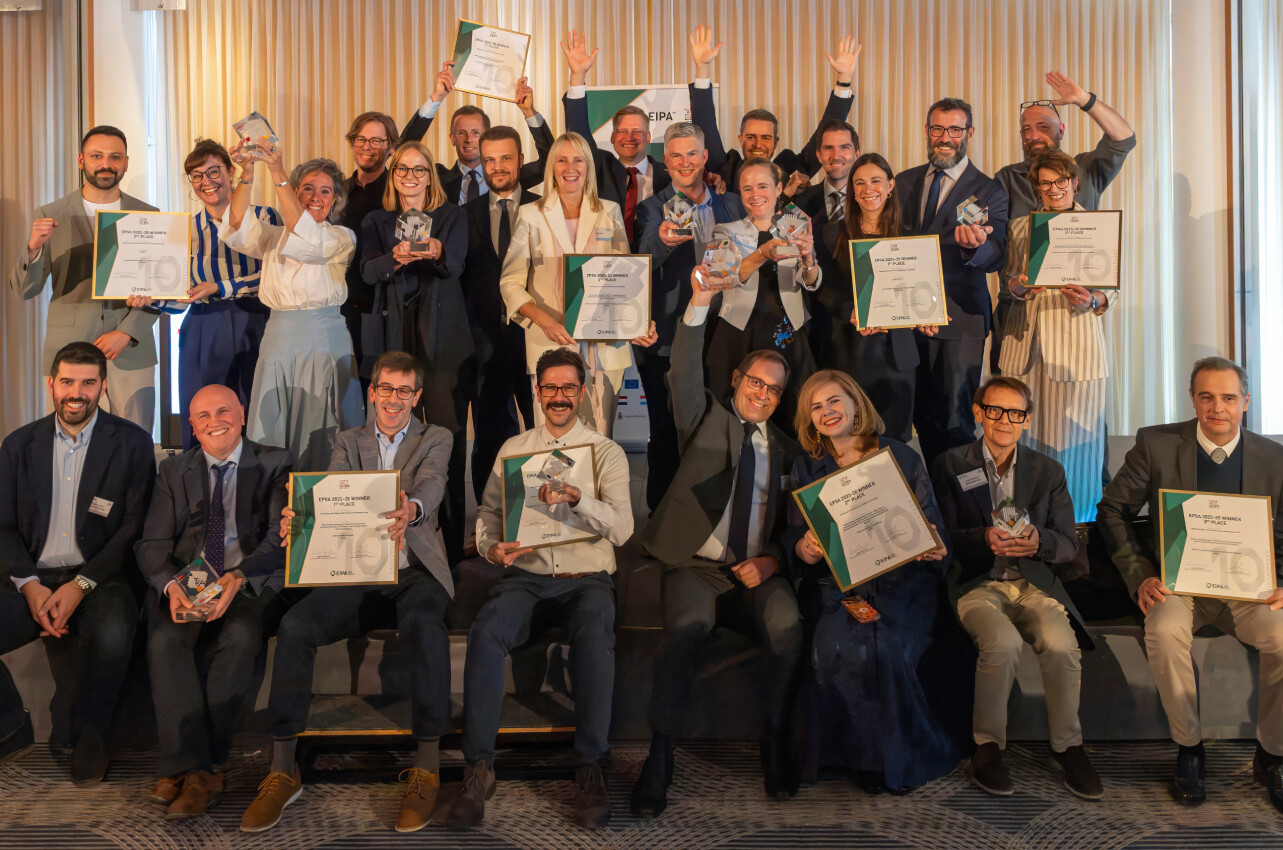
In the Netherlands, the search for housing sometimes begins with a simple question: which buildings and plots of land could already be used? Finding the answer then requires much more than just a map. It is necessary to check whether the site is suitable, secure funding and win over local stakeholders. This approach is one of three projects that topped their respective categories at the European Public Sector Award 2025–2026, announced on 24 September in Maastricht by the European Institute of Public Administration (EIPA), which also has a presence in Luxembourg. The competition recognises initiatives by European public administrations. This year, the top prizes went to projects from the Netherlands, Switzerland and Spain.
- The Dutch initiative De Thuisgevers arose from the difficulties faced by local authorities in quickly providing accommodation for refugees who had been granted residence status. It helps them to identify unused buildings, assess the feasibility of converting them and secure national funding. Volunteers and local partners can then support the residents’ settlement. The project has expanded to include a systematic search for other housing options. A mapping exercise identifies buildings and plots of land; specialists and the local authority then assess which could accommodate residents quickly and which would require further preparation. According to EIPA, 2,200 promising sites have been identified across 29 local authorities, with an estimated capacity of at least 20 homes per site on average. This figure reflects potential sites that have been identified, not homes that have been built.
- In Switzerland, the problem lies in the flow of information between embassies and federal authorities. In order to prepare a diplomatic position, departments must consult with their colleagues, gather data on the countries concerned and keep a record of contributions. The Federal Department of Foreign Affairs has brought these tasks together in CH@World 2.0, a platform used by around 4,000 people.
The innovation is not limited to the software. The project has also standardised certain working methods, notably the format of diplomatic notes. Its aim is to enable departments to access the same information, keep track of consultations and avoid duplicating work. The old system was completely replaced in January 2025.
- The third winner, the Galician public health service, has chosen to make changes to the way it procures goods and services. When a medical or organisational need cannot be satisfactorily met by the market, the organisation consults healthcare professionals, then engages with companies and research centres before launching a public procurement process. The solutions developed are then monitored and evaluated.
This public procurement strategy for innovation has been in place since 2012. In particular, it covers tools relating to electronic health records, electronic prescriptions, remote monitoring and clinical trials. More than €120m have been allocated up to 2026 to programmes using this approach. The award recognises a procurement and development approach followed over several years, rather than a specific healthcare product.
The three projects address distinct needs. They also illustrate what another public authority should consider before adopting an award-winning idea: in the case of housing, the number of sites that have actually been transformed; in the case of diplomacy, the time saved and the quality of information sharing; and in the case of healthcare, the actual use made of the solutions procured. The competition highlights the methods. Their impact is judged by their results.