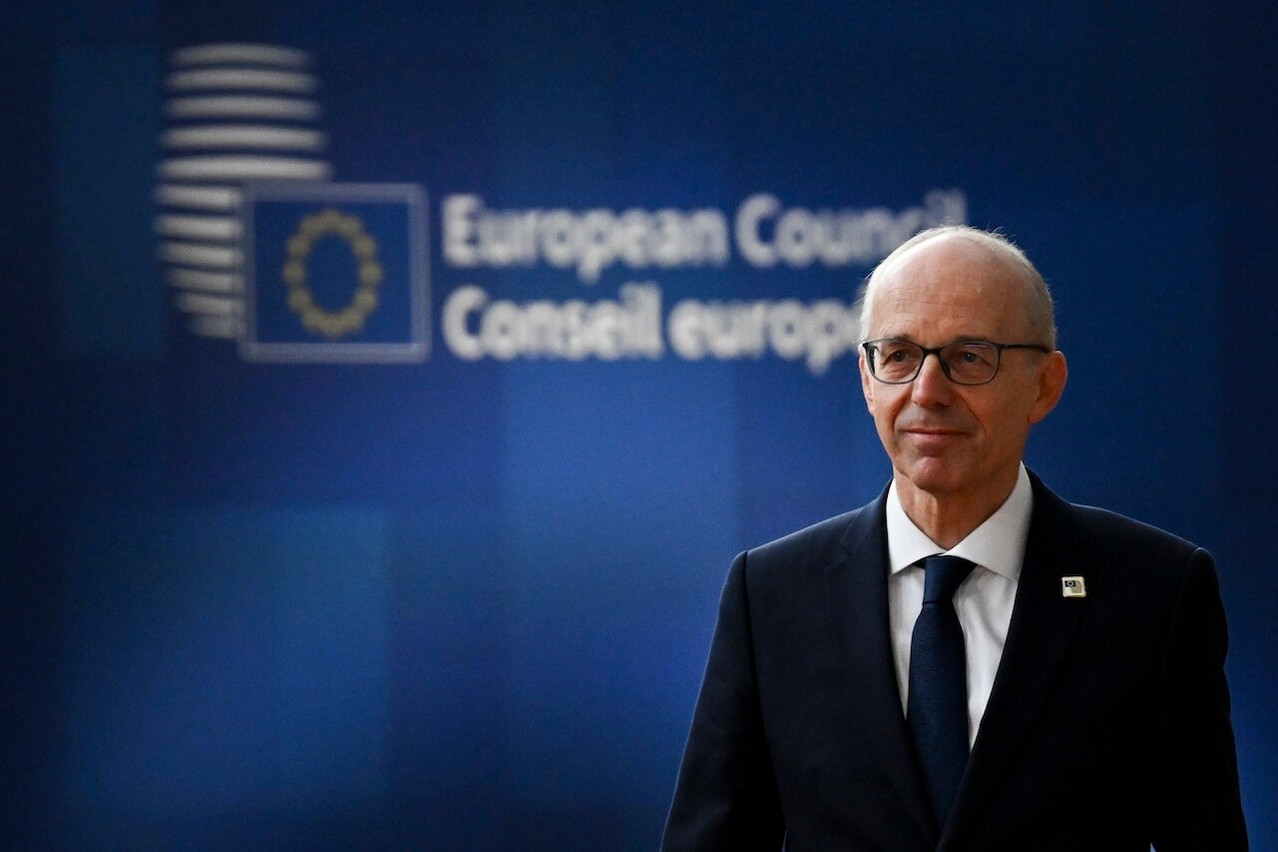
“We cannot attribute all a country’s internal problems to migration or illegal immigration.” Following the European Council meeting on 15 and 16 October in Brussels, 
To the extent that it helped to scupper the adoption of more ambitious conclusions on the subject. “There are different types of migration,” he insisted, criticising the tendency of some of his counterparts to “lump everything together”. He added: “I have very clearly rejected this conflation, as practised by some.”
Luxembourg says no to a bidding war
This tone stands in stark contrast to that of a growing number of European leaders. Led in particular by the Danish Prime Minister, Mette Frederiksen, and her Italian counterpart, Giorgia Meloni, several Member States are pushing for a tightening of the rules, notably through the development of migrant return centres outside the European Union (EU).
But this time, no consensus was reached. The nine paragraphs originally devoted to immigration in the draft summit conclusions were reduced to two. According to Agence Europe, Luxembourg, alongside France and Spain, played a central role in opposing these new guidelines. Luc Frieden acknowledges this. In his view, some of the proposed wording did not reflect Europe’s “fundamental values”. This was a red line that the Luxembourg Prime Minister was unwilling to cross.
This refusal to get drawn into a bidding war does not, however, mean that Luxembourg advocates a permissive migration policy. The CSV-DP coalition has made managing migration flows, speeding up asylum procedures and improving the return of rejected applicants its priorities. And since 12 June 2026, the country has been implementing the new European Pact on Migration and Asylum, which includes, in particular, stricter screening and fast-track procedures for certain applications for international protection.
The government’s policy is clear and unequivocal: to welcome and integrate those entitled to protection, whilst arranging for the return of those who cannot legally remain in the country more swiftly. In short: yes to immigration, but controlled immigration.
Economic necessity above all else
In practice, the Grand Duchy cannot view immigration solely through the prism of border control and political controversies. The country’s economic model relies on the contribution of foreign workers, whether they are residents or cross-border workers. Luc Frieden reiterated this to his audience in Brussels: legal immigration remains essential to the European economy, and even more so to Luxembourg’s. The government intends to limit irregular arrivals whilst preserving the country’s ability to attract the skilled workers and labour force its economy needs.
Luxembourg therefore wants a Europe that takes a firmer stance on irregular immigration, but not a Europe that would close its doors to immigration. This position could well isolate the country at a time when governments in favour of increasingly restrictive immigration measures are gaining ground. Discussions on the externalisation of returns illustrate this trend.
The October European Council showed that Luxembourg still has allies, notably in Paris and Madrid. But this alliance could be undermined by developments in national politics. Spain and France – particularly France – are on the eve of elections that could well result in the far right coming to power.