French MEP Chloé Ridel questioned on Thursday whether Luxembourg's existing anti-corruption committee could meet new European requirements, raising concerns about the effectiveness of checks on public officials' financial interests and potential conflicts.
Speaking at a forum organised by the Luxembourg Association for the Prevention of Corruption (LutCor), she singled out COPRECO, a Luxembourg government committee that advises on anti-corruption measures and coordinates their implementation across ministries. The EU's first dedicated anti-corruption directive will require member states to adopt national strategies and ensure that bodies responsible for preventing corruption can carry out their duties effectively.
Luxembourg's oversight under scrutiny
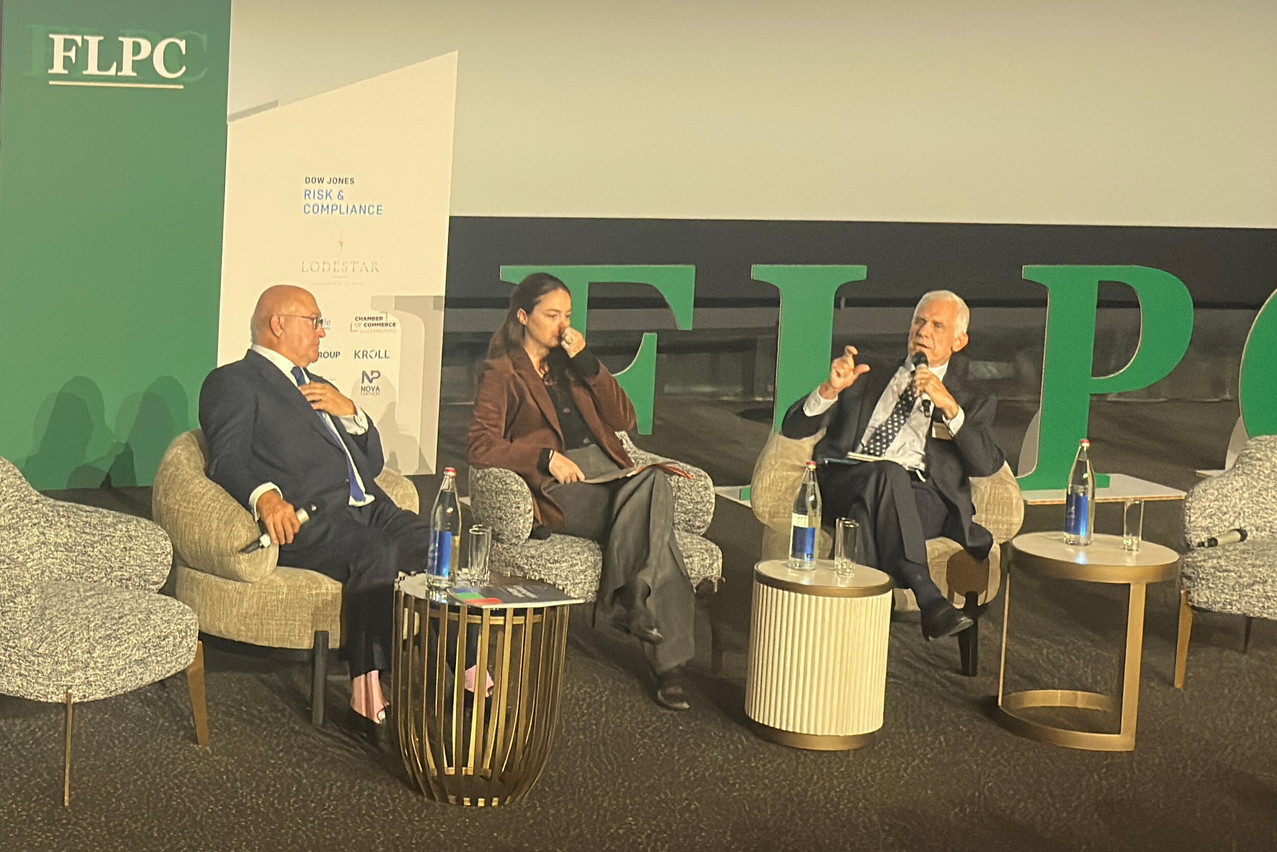
Ridel, a member of France's Socialist Party who helped negotiate the legislation for the Socialists and Democrats political group in the European Parliament, spoke on a panel alongside Transparency International member Nicola Bonucci (former senior OECD official) and law firmFranklin Paris’s Michel Sapin (a former French minister of the economy, finance and industrial sovereignty).
“Luxembourg has COPRECO, the committee for the prevention of corruption, but it does not meet the conditions laid down by the directive for an autonomous authority responsible for checking that the rules are applied,” she said. Her criticism focused on whether obligations to disclose financial interests and conflicts were backed by effective verification.
Adopted in April, the directive establishes common European rules on corruption offences, penalties and prevention. Bodies responsible for preventing corruption must have appropriate expertise, resources and safeguards against improper interference. Their duties can include checking declarations of property and financial interests, monitoring potential conflicts and identifying activities vulnerable to corruption.
The legislation does not necessarily require Luxembourg to create a new agency. Established in 2007 and chaired by the justice minister or a delegate, COPRECO brings together government representatives but does not itself investigate or prosecute corruption. Whether its existing responsibilities are sufficient to meet the directive's preventive requirements remains unresolved.
A strategy still taking shape
“Luxembourg does not have a robust national corruption-prevention strategy, which this directive makes compulsory,” Ridel told the forum. The government has, however, already begun work towards one.
The European Commission's July 2026 rule-of-law report recorded that Luxembourg launched an assessment in January to identify corruption risks in government and business, including cross-border activities. The findings are intended to guide the national strategy.
The Organisation for Economic Co-operation and Development (OECD) confirmed COPRECO's involvement in the assessment. While welcoming the initiative, it noted that Luxembourg had not provided a provisional timetable for completing the strategy. The government has yet to establish publicly whether COPRECO's responsibilities will change or additional functions will be assigned elsewhere.
OECD criticises delayed reforms
The same panel also examined Luxembourg's record on bribery involving foreign officials. Bonucci, a former senior OECD legal official and member of Transparency International's international council, cautioned against treating the country's favourable position in international corruption rankings as proof of effective enforcement.
Transparency International's Corruption Perceptions Index measures perceptions of corruption in domestic public institutions, he explained, rather than how effectively countries prevent companies from bribing officials abroad. He pointed instead to the OECD Working Group on Bribery, which monitors countries' enforcement of international rules against bribery in business transactions.
Its July 2026 report assessed Luxembourg's response to recommendations from a 2024 examination under the international anti-bribery convention. “The Working Group nevertheless regrets that the overall implementation of Phase 4 recommendations remains insufficient,” it concluded, a finding Bonucci cited during the panel.
Of the 46 recommendations, Luxembourg had fully implemented 10, partly implemented 22 and left 14 unimplemented. Despite progress in some areas, the OECD remained concerned about weaknesses in detecting and prosecuting bribery involving foreign public officials.
The report found that several reforms had been postponed while Luxembourg awaited the EU directive. They included changes to the foreign-bribery offence, penalties, rules excluding offending companies from competing for public contracts, and incentives for businesses to report suspected wrongdoing voluntarily.
The OECD rejected forthcoming European legislation as a justification for delay. Its findings concern bribery in international business transactions rather than the directive's broader domestic prevention measures, but establish a separate set of outstanding obligations for Luxembourg.
When safeguards reach political power
In an opening address earlier in the forum, Hanne Juncher, the Council of Europe's director responsible for security, integrity and the rule of law, had described the difficulty of implementing anti-corruption safeguards that directly affect senior political figures.
“The closer a rule gets to power, the more slowly it's likely to be implemented,” she said. Drawing on the experience of the Group of States against Corruption (GRECO), which monitors countries' anti-corruption measures, she cited checks on politicians' financial declarations, rules of conduct for ministers and parliamentarians, and transparency about lobbying.
Those observations concerned GRECO's experience across its member countries rather than a new assessment of Luxembourg. Juncher also warned that inadequate budgets, political pressure and restricted access to information could prevent oversight bodies from carrying out their responsibilities independently.
“Independence in an organigram means very little without resources and without a direct line to the top,” she said. Her warning underscored the distinction between giving an institution formal responsibilities and ensuring that it has the means to exercise them.
For Luxembourg, that distinction will become important as the government turns its corruption-risk assessment into a national strategy and decides which institutions will be responsible for enforcing preventive safeguards.