Europe has no shortage of scientific talent or technological discoveries. Its universities and research institutes produce innovations in artificial intelligence, biotechnology, quantum computing, space technologies and advanced materials. Yet translating this scientific expertise into companies capable of attracting private investment remains a major challenge.
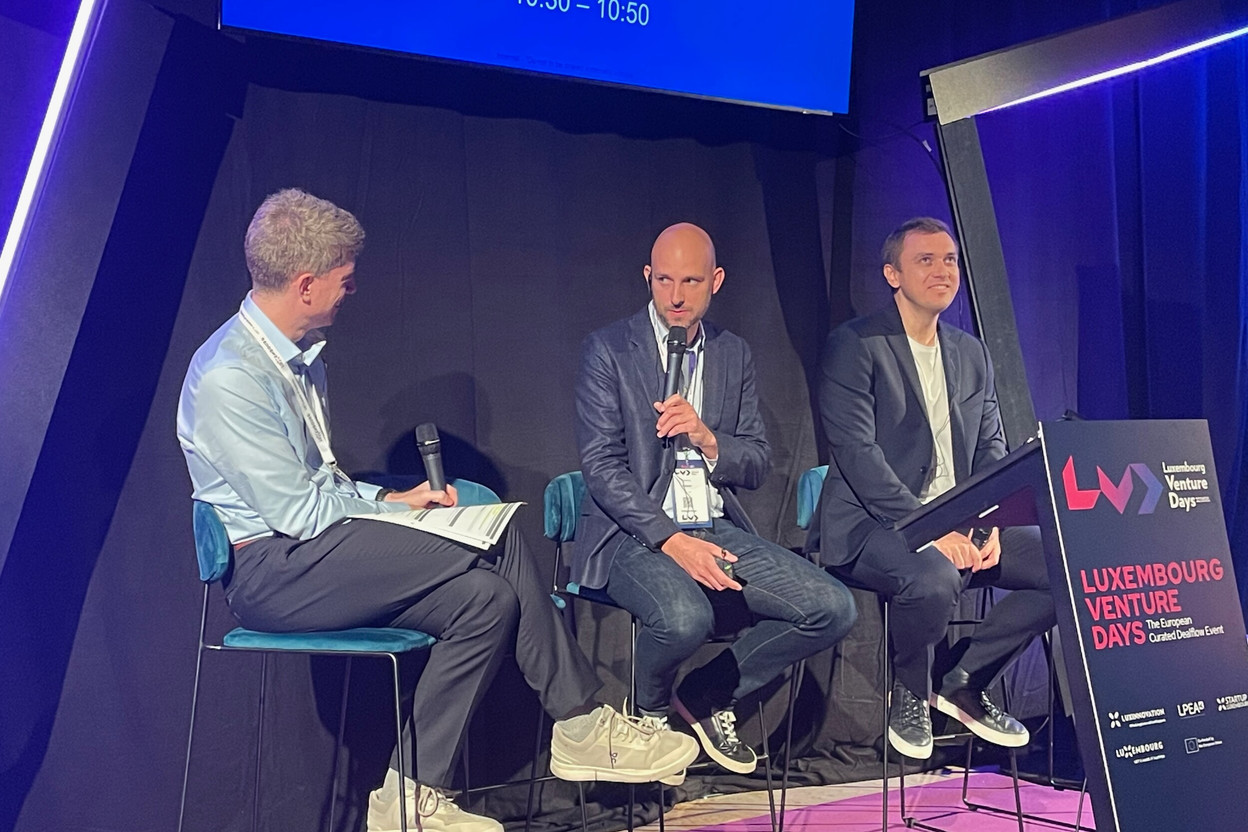
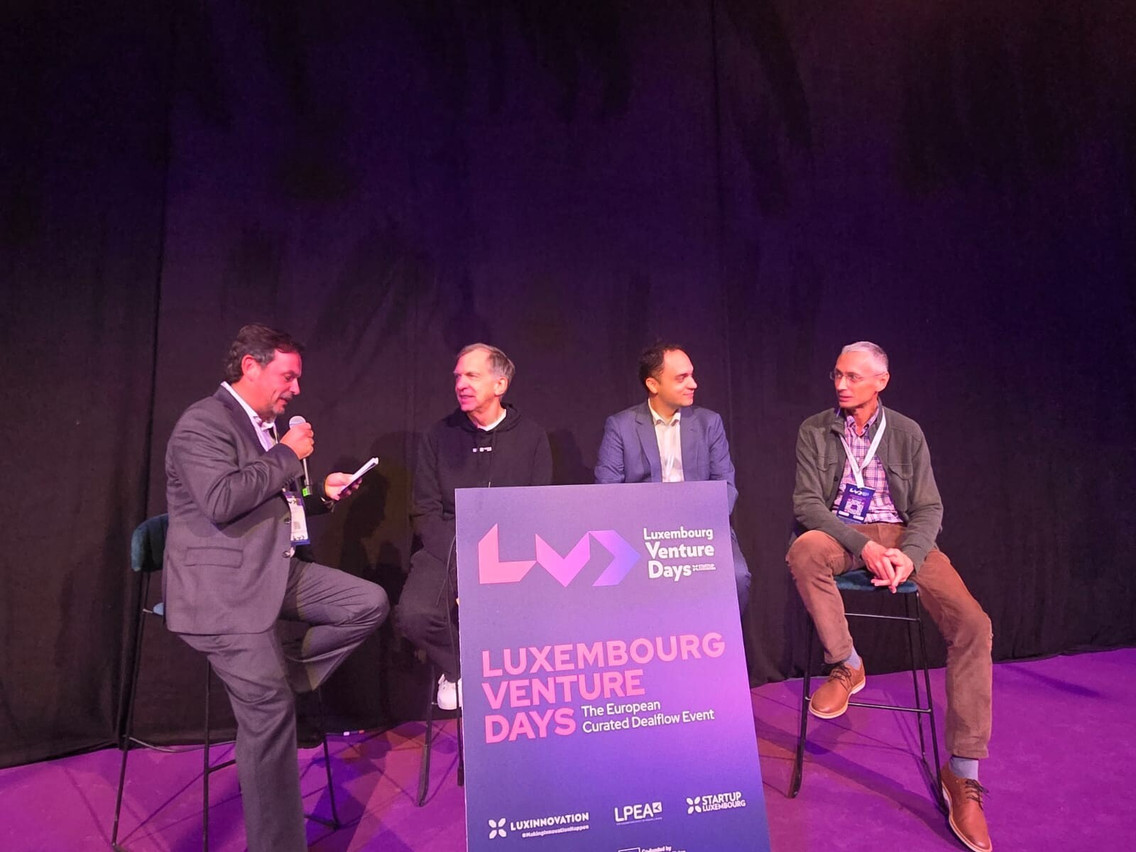
At Luxembourg Venture Days, a panel entitled How Universities Turn Research into Investable Ventures examined what happens between a promising laboratory discovery and the creation of a business that investors are willing to finance. Moderated by Stefano Pozzi Mucelli from Luxinnovation, the discussion brought together Philipp Gerbert, CEO of TUM Venture Labs, Alex Godlewski, Head of Ventures at LIST Ventures, and Dmitry Chikhachev, co-founder of Runa Capital.
Although approaching the subject from different perspectives, the three speakers agreed on a fundamental principle: scientific excellence does not automatically translate into commercial success. What matters is the ability to identify a market, assemble the right team and develop a credible strategy for transforming technology into a product.
A good technology is not necessarily a good business
For Alex Godlewski, the distinction between technological potential and commercial viability is central to the work carried out at LIST Ventures. Operating as an internal venture-building initiative within the Luxembourg Institute of Science and Technology (LIST), the programme helps transform intellectual property developed by researchers into new companies. Its activities cover several technological fields, including artificial intelligence, digital technologies, advanced materials, biotechnology and space technology.
Rather than simply helping scientists present their discoveries to investors, LIST Ventures works on the foundations of the business itself. The first step is identifying whether the technology addresses a sufficiently important problem and whether customers would be prepared to pay for a solution. A scientific breakthrough may be technically impressive without necessarily corresponding to an identifiable commercial demand.
Researchers must therefore answer questions that are not always part of their traditional academic work: Who are the potential customers? What problem needs solving? How can the technology become a marketable product? And what resources will be required to reach that stage? Alex Godlewski stressed that the maturity of the researchers themselves is as important as the maturity of their technology.
A promising innovation needs people capable of taking responsibility for its commercial development, making decisions and delivering results within a defined timeframe.This is why LIST Ventures provides training and coaching designed to help scientists develop entrepreneurial capabilities before approaching potential investors.
Scientists explore, entrepreneurs must focus
Dmitry Chikhachev, co-founder of venture capital firm Runa Capital, highlighted one of the most difficult transitions facing academic founders: moving from scientific exploration to commercial execution. Scientific research is naturally driven by curiosity. Researchers investigate different possibilities, test hypotheses and seek to improve their technologies. Entrepreneurship requires a different discipline. A startup cannot pursue every possible application of its technology simultaneously. It must identify a specific commercial opportunity and concentrate its resources on developing a product capable of addressing that market.
For Dmitry Chikhachev, this narrowing of focus is particularly important when assessing investment opportunities originating from universities and research institutions. Investors want to understand whether founders have identified a clear path towards a minimum viable product, rather than continuing to explore the full scientific potential of their discoveries.This can represent a considerable cultural change for researchers who have spent years developing and refining a technology.
The question is no longer simply whether the science works, but whether the founders are prepared to transform it into a business. Dmitri Chikhachev also underlined the importance of commitment. Investors need to see that the team has a convincing vision of the product it intends to build and is prepared to execute that vision. While venture capital firms may be willing to accept considerable market uncertainty at an early stage, they still need confidence in the founders' ability to deliver.
Preparing entrepreneurs long before their first pitch
At TUM Venture Labs, Philipp Gerbert believes that entrepreneurial preparation should begin well before a researcher identifies a technology suitable for commercialisation. Associated with the Technical University of Munich, TUM Venture Labs operates across 12 deep-tech fields and supports a substantial pipeline of entrepreneurial projects. Philipp Gerbert described an ecosystem designed to encourage students and researchers to consider the commercial potential of their work throughout their academic careers.
The ambition is to develop an entrepreneurial mindset across the university, rather than treating company creation as an activity reserved for researchers who have already developed a promising invention. He illustrated this approach by referring to the university's recent welcome event for approximately 17,000 new students, whom he described as potential future entrepreneurs.This early exposure to entrepreneurship matters because building a company requires capabilities that are not necessarily developed through scientific training. Philipp Gerbert identified three priorities for aspiring founders.
The first is a thorough understanding of their target market. The commercial requirements of a healthcare startup, a defence technology company or a space venture can differ considerably. In defence, for example, entrepreneurs must understand procurement procedures, export controls and the specific constraints of working with military customers. The second priority is the effective integration of artificial intelligence, both in technological development and in the broader process of building a business.The third is assembling a team with sufficient commercial ambition and expertise to bring the technology to market.
For Philipp Gerbert, preparing to meet investors is not simply a question of refining a pitch presentation. It is a longer process involving exposure to investment networks, discussions with experienced entrepreneurs and a gradual understanding of what potential financial partners expect. By the time founders formally approach an investor, they should already have developed a clearer understanding of the market and the financing environment.
Why intellectual property is not always the biggest obstacle ?
Academic spin-offs often face complicated negotiations over intellectual property ownership, licensing agreements and company valuations. Universities and research institutions may retain rights to technologies developed within their laboratories, while entrepreneurs need sufficient freedom to commercialise those innovations and attract external investors. These negotiations can become particularly sensitive when determining the economic interests of the research institution and the newly created company. However, the panellists suggested that intellectual property is not necessarily the main reason why investment discussions fail.
At LIST Ventures, Alex Godlewski explained that establishing clear and transparent intellectual property policies helps researchers and investors understand the conditions under which a technology can be commercialised. Predictability is important because investors need confidence that the startup will be able to develop its activities and raise additional capital as it grows. Nevertheless, the central issue remains the quality of the team and the credibility of its business plan.
A startup may have secured favourable licensing terms but still struggle to raise capital if investors are unconvinced by its commercial strategy. Conversely, a strong team with a clear understanding of its market may be better positioned to navigate the technical and legal complexities associated with university spin-offs.
Deeptech requires different financing strategies
Another difficulty concerns the amount of time and capital required to transform scientific discoveries into commercially viable products. Not all startups follow the same development trajectory. A software company may be able to launch an initial product relatively quickly and improve it through customer feedback. A business developing advanced hardware, quantum technologies or space infrastructure may require several years of research, testing and certification before generating significant revenues. This creates different financing requirements and makes the selection of appropriate investors particularly important.
Alex Godlewski explained that venture-building programmes must help researchers anticipate their funding needs and identify the milestones that investors will expect them to achieve. The objective is to establish a roadmap linking technological development, commercial validation and successive financing rounds.A company seeking capital too early, without sufficient evidence of its progress, may struggle to convince investors. But approaching the wrong type of investor can be equally problematic. Some venture capital funds are comfortable financing long development cycles and significant technological risks, while others prioritise businesses capable of generating revenues more rapidly.
The challenge is therefore not only to make a startup attractive to investors, but also to identify financial partners whose investment strategies match its technological and commercial characteristics. Philipp Gerbert pointed to the importance of European funding mechanisms, including support from the European Innovation Council, in helping capital-intensive deep-tech companies progress through development stages that private investors may be reluctant to finance alone.
The milestones depend on the industry
The discussion also highlighted why investors cannot apply identical criteria to every scientific startup. In artificial intelligence, the availability of talent and the ability to develop commercially relevant applications may be decisive. In space technologies, founders may need to demonstrate that they can successfully build, test or operate complex systems. In nuclear fusion, investors must assess scientific uncertainties, technical feasibility and the company's ability to reach meaningful development milestones. Healthcare technologies bring another set of considerations, including the international competitive environment and the pathway towards commercial adoption.
Philipp Gerbert stressed that founders need to understand these sector-specific requirements before approaching investors. A convincing investment proposition must therefore demonstrate more than technological progress. It must explain which risks have already been reduced, which challenges remain and how additional financing will help the company reach its next stage.
For Dmitri Chikhachev, the ability to articulate this progression is essential. Investors want to see a credible roadmap connecting the company's current technological position with the product it ultimately intends to commercialise.
European ambitions need a global perspective
Beyond the challenges facing individual companies, the panel raised a broader question about Europe's competitiveness in deep technology. European universities and research institutions possess considerable scientific expertise, but companies emerging from this ecosystem must compete internationally. Philipp Gerbert argued that founders should not limit their ambitions to national or European markets. A startup developing breakthrough technology needs to understand its position relative to competitors in the United States, China and other major innovation centres.
This is particularly relevant in sectors where technological leadership and commercial opportunities are global from the outset. For investors, the size of the addressable market is also a decisive consideration. Even an excellent technology may struggle to attract venture capital if its potential market is too limited to support the growth expectations associated with this type of investment. The ability to demonstrate international commercial potential can therefore influence both the attractiveness of a startup and the financing opportunities available to it.
Connecting scientific talent with private capital
The discussion concluded with a reflection on the role of public institutions and the wider European investment ecosystem. Alex Godlewski emphasised the importance of bringing scientists and investors into closer contact. Researchers need to understand how investment decisions are made, while venture capital firms can contribute valuable feedback on the commercial potential of emerging technologies.He also encouraged investors to provide more detailed explanations when assessing projects, rather than limiting their responses to an investment decision. Such exchanges can help scientific founders improve their strategies and identify weaknesses before their next fundraising attempt.
Philipp Gerbert, meanwhile, highlighted the need for deeper European capital markets and fewer obstacles to company development, suggesting that structural improvements could be as important as additional public financial support. For Luxembourg, where research institutions, venture-building initiatives and investment professionals operate within a relatively concentrated ecosystem, the challenge is to translate these connections into companies capable of attracting capital and scaling internationally.
The message from the panel was ultimately clear: turning research into an investable venture requires more than a technological breakthrough. It demands a shift in mindset, from scientific exploration to commercial execution, supported by the right entrepreneurial skills and financing partners. Europe's challenge is not simply to produce more innovation, but to ensure that its scientific discoveries have a credible path towards becoming successful businesses.